How Cathay increased bookings 438% by better understanding the why
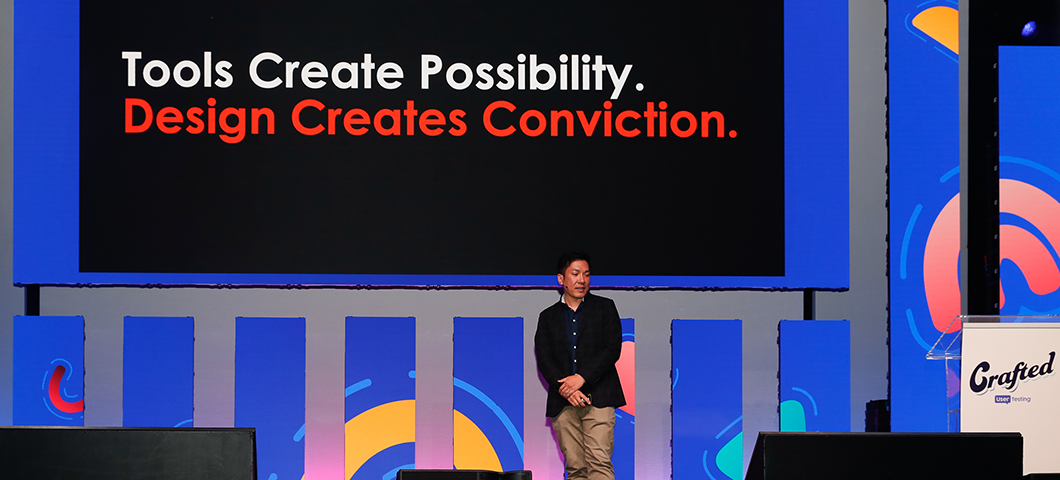
In 1839, a new technology threatened to make an entire profession obsolete.
Photography had arrived. For painters who had spent their lives perfecting the ability to reproduce reality, the camera represented an existential threat.
But something unexpected happened.
Photography didn't kill painting. It freed artists to explore what a camera couldn't capture. Impressionism, expressionism and entirely new forms of artistic expression followed.
Nearly two centuries later, designers face a remarkably similar moment.
At Crafted London, Auros’ annual experience design event, Ernest Hui of Cathay used that historical turning point to challenge how design leaders think about artificial intelligence, customer research and their influence within organizations.
“In 1839, a new technology arrived that changed everything. Not eventually. Not gradually. But immediately and permanently,” he said. “I want to tell you that story. And then I want to tell you why we’re living it again right now.”
Watch Ernest’s presentation and others from Crafted Seattle and Crafted London in full on Insight+
When technology makes creation almost effortless, he said, the real competitive advantage becomes knowing what deserves to be created.
"So what becomes scarce?" Ernest asked. "Conviction."
Judgment becomes the differentiator
Ernest believes the opportunity for designers isn't to compete with AI on output. It's to become more influential in determining which ideas deserve investment.
"Conviction isn't personal certainty," he explained. "It's the willingness to defend a position because you have the evidence to back it."
That distinction matters.
Product leaders need confidence that engineering resources are being spent on the right problems. Design leaders need evidence that helps them defend decisions. Researchers need their findings to influence strategy rather than simply validate completed work.
The common denominator is human understanding.
How Cathay turned design into a strategic function
At Cathay, an airline where safety, consistency and customer trust are fundamental, convincing stakeholders to embrace change isn't easy, Ernest said.
He described a design organization that once operated like a black box. Stakeholders submitted requests, designers produced screens, and much of the thinking between those steps remained invisible.
The consequence was predictable.
Decisions were often made before designers entered the conversation.
"Design isn't magic. It's evidence. It's iteration and it's judgment," Ernest said.
Cathay began changing that perception by building research capabilities, embedding designers within product teams and making the reasoning behind design decisions visible.
Its design team grew from five to 40 people. More importantly, its influence expanded.
"A team of five answers briefs," he explained. "A practice of 40 actually begins to set them."
The business case for watching before building
Consider Cathay Holidays, the airline's flight-and-hotel booking experience.
Despite attracting substantial traffic, six out of ten visitors abandoned the booking process.
Analytics identified the problem. But analytics couldn't explain “the why.”
So Cathay watched and listened to people attempt to book trips.
Researchers discovered that customers struggled to find the option for changing flights. The functionality existed, but it was on another page, and below the fold.
The solution required no elaborate redesign. Cathay moved the option where customers were already looking and made pricing differences easier to understand.
The result: a 438% increase in bookings, Ernest said.
A second project focused on Cathay's membership dashboard.
Customers wanted to advance through loyalty tiers, but struggled to understand their existing benefits and what progressing would unlock.
Research revealed 64% couldn't distinguish the benefits of their current tier from the previous one.
Rather than adding more explanations, the team removed unnecessary information and emphasized the next milestone and its value.
The reported results: a 220% increase in status upgrades and a 57% increase in member revenue.
Both examples challenge a persistent assumption about digital innovation: that meaningful improvements require adding something new.
Sometimes the most valuable design decision is knowing what to remove.
AI raises the ceiling, but humans choose the direction
Ernest sees AI as another technological turning point. But technology alone cannot determine whether an experience solves the right problem.
The responsibility remains with the people asking questions, interpreting customer behavior and deciding what deserves to move forward, he said.
The practical challenge for design leaders is to make that judgment central to how their organizations operate.
Watch customers before building. Make the evidence visible. Invite stakeholders into the reasoning, not just the final presentation.
And use AI to accelerate learning rather than simply accelerate production.
The introduction and adoption of photography expanded what painters could imagine. AI, Ernest suggested, could do something similar for design.
The opportunity is there. What matters is how designers choose to use it.
"What happens next will depend on what we have the conviction to create," he said.
Learn more about how Cathay leverages UserTesting to scale insights, reduce costs, and design customer-centric digital experiences. Watch the video